


Nationally, the figures point to a market that remains stable, but not uniform. The median price eased slightly by 0.3% year-on-year to $788,000, while excluding Auckland, median prices increased by 1.4% to $710,000 – highlighting continued strength across parts of the country.
Market Summary:
The total number of properties sold in New Zealand decreased by 0.1% year-on-year, from 7,864 to 7,853 sales. New Zealand, excluding Auckland, declined by 0.6% year-on-year, from 5,404 to 5,370.
Nationally, the seasonally adjusted figures for New Zealand show a sales count decrease of 4.1% compared to last month. Seasonally adjusted sales figures for New Zealand, excluding Auckland, show a 1.2% month-on-month decrease.
Eleven of the sixteen regions recorded year-on-year increases in median prices; the highest increases were observed in:
– Southland, up 11.8% to $520,000
– Nelson, up 9.2% to $710,000
– Northland, up 8.7% to $750,000
Northland stats:
The median price for Northland increased by 8.7% year-on-year to $750,000
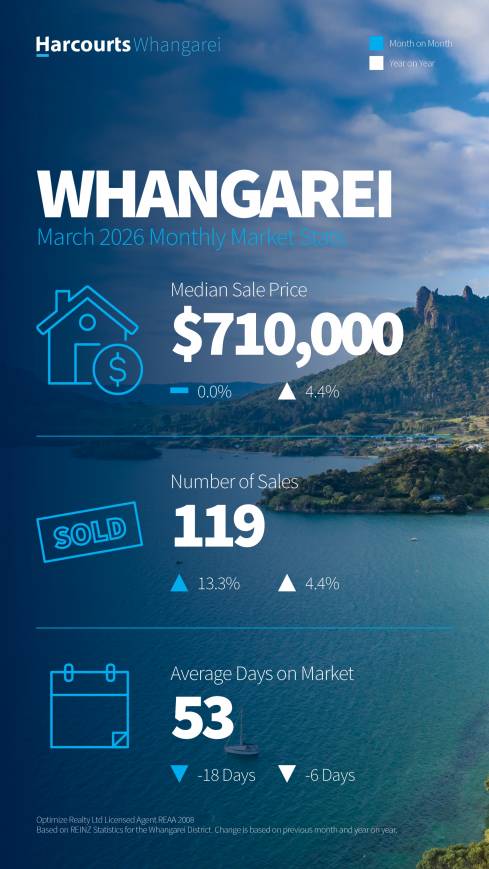
“Local buyers and owner-occupiers were the most active buyer groups. First-home buyers and investors were prevalent in Whangarei.
Most vendor expectations of asking prices aligned with market conditions, with many also open to negotiations. Attendance at open homes was patchy across the region; overall numbers were lower than usual for the time of year. The number of properties using auction as a method of sale had declined, as had the number of active bidders and sales under the hammer.
Factors such as lack of buyer urgency, hesitation to enter the market, cost-of-living concerns, and rising fuel prices impacted market sentiment. Uncertainty about the conflict in the Middle East also influenced market sentiment.
Local salespeople cautiously state that the market will remain as is while current economic conditions persist. Although they mention that there are some good opportunities for those who want to purchase despite these challenges.”
Lizzy Ryley
REINZ Chief Executive